How Medicaid policy shapes the future of rural communities
Listen to "How Medicaid Policy Shapes the Future of Rural Communities" on Spreaker.
Subscribe and listen to Population Healthy on Spreaker, Apple Podcasts, Spotify, YouTube, or wherever you listen to podcasts!
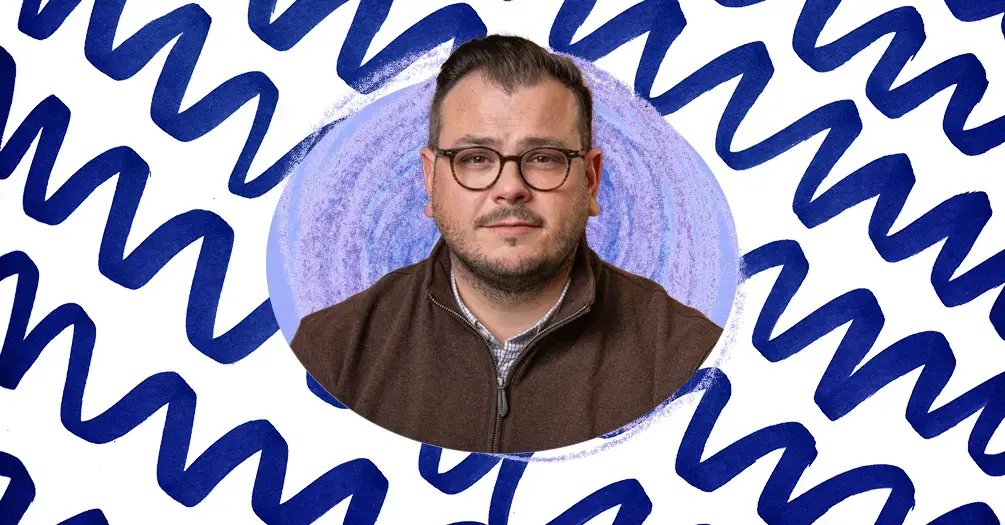
Health policy researcher Michael Shepherd explores the importance of Medicaid in rural communities—not only for those who directly receive benefits, but for everyone who counts on having a local clinic, mental health provider, or hospital. Shepherd explains what major changes to Medicaid could mean for rural communities, and how every policy shift can have profound consequences for families, local economies, and entire regions.
In this episode

MICHAEL SHEPHERD
Assistant Professor of Health Management and Policy, University of Michigan School of Public Health
Michael Shepherd’s research focuses on questions of political and economic inequality, with an emphasis on the experiences of marginalized groups with government and the politics of health policy in the United States. His book project focuses on how poor, rural people experience and politically-respond to a variety of health experiences and policies.
Resources
- Op-ed: How Medicaid cuts will harm rural communities most
- From KFF: Status of State Medicaid Expansion Decisions
Episode transcript
For accessibility and convenience, we've provided a full transcript of this episode. Whether you prefer reading or need support with audio content, the transcript allows you to easily follow along and revisit key points at your own pace.
[music]
0:00:02.0 Hello and welcome to Population Healthy, a podcast from the University of Michigan School of Public Health. Join us as we dig into important health topics, stuff that affects the health of all of us at a population level.
[music]
0:00:35.3 Are you ready to make a real impact in public health? Discover the online MPH degree program from the top-ranked University of Michigan School of Public Health. Take your career to new heights with flexibility, customized learning, and world-class faculty. Join a community dedicated to shaping the future of public health and earn your degree from anywhere in the world. Learn more at publichealth.umich.edu/online-mph.
[music]
0:01:16.0 Welcome to Population Healthy from the University of Michigan School of Public Health. I'm Dr. Michael Shepherd, a health policy researcher focused on rural healthcare. Today, I'm looking at what major changes to Medicaid could mean for rural communities, places where healthcare is already fragile and every policy shift can have profound consequences for families, local economies, and entire regions. I want to start by explaining just how vital Medicaid is for rural communities, not only for those who directly receive benefits, but for everyone who counts on having a local clinic, mental health provider, or a hospital. A disproportionate amount of rural Americans depend on Medicaid. Just under one quarter of all rural Americans receive their health insurance from the Medicaid program. Even more starkly, over half of rural children are covered by Medicaid, and half of rural births are covered by Medicaid. As a result, the program is critical for providing healthcare access to millions of rural Americans. And that's not it. Medicaid is also a financial lifeline for rural hospitals and clinics. The average budgets of rural hospitals, mental health providers, and primary care physicians are supported in large part by Medicaid dollars. So when there are changes to the Medicaid program, it can ripple throughout communities in a variety of ways, influencing access to things like primary care, OB-GYNs, and behavioral health.
[music]
0:02:56.0 So what are the recent changes to Medicaid, and why are they causing such concern for many rural Americans? Over the summer, Congress and President Trump signed into law the One Big Beautiful Bill Act, or HR1, which instituted a number of really important changes to the Medicaid program. First and foremost, the policy changed the way states are able to finance their Medicaid programs, likely leading to fewer dollars being allocated at the state level to the Medicaid program. Additionally, the federal government implemented work requirements for those seeking to access Medicaid benefits. Work requirements provide cumbersome administrative burdens for folks who are trying to access health insurance that they are entitled to. The reality is the vast majority of folks who are eligible for Medicaid and can work already are. The added paperwork necessary to prove that one is working enough hours merely adds a layer of red tape for those trying to access health insurance. Both of these changes and others are drastically going to hurt the ability of Americans to sign up for the Medicaid program and access Medicaid dollars. As a result of these changes, over 300 rural hospitals are on the brink of closure, in large part due to these hospitals' reliance on Medicaid dollars to cover their operations.
Many of these hospitals, which would have survived for many years to come despite financial struggles, are likely to face closure in the immediate future. The recent changes to the Medicaid program will have demonstrable effects on people accessing healthcare in rural communities, regardless of whether or not they're personally enrolled in Medicaid.
[music]
0:04:45.0 In 2007, in the small rural community of McNairy County, a tragic event occurred that shaped the way the community felt about healthcare for many years. At a Cars for Kids charity, a drag racer crashed his car into the crowd, killing six and injuring 20 more, many of which were small children. When the crash occurred, victims were able to be transported quickly to the nearby Tennova Regional Healthcare Center and received life-saving care. Just under a decade later, the Tennova hospital closed, leaving the residents of this community without a hospital. When asked about the implications of the closure, one man recalled what could have happened the day of that car crash if that hospital had not been open.
[music]
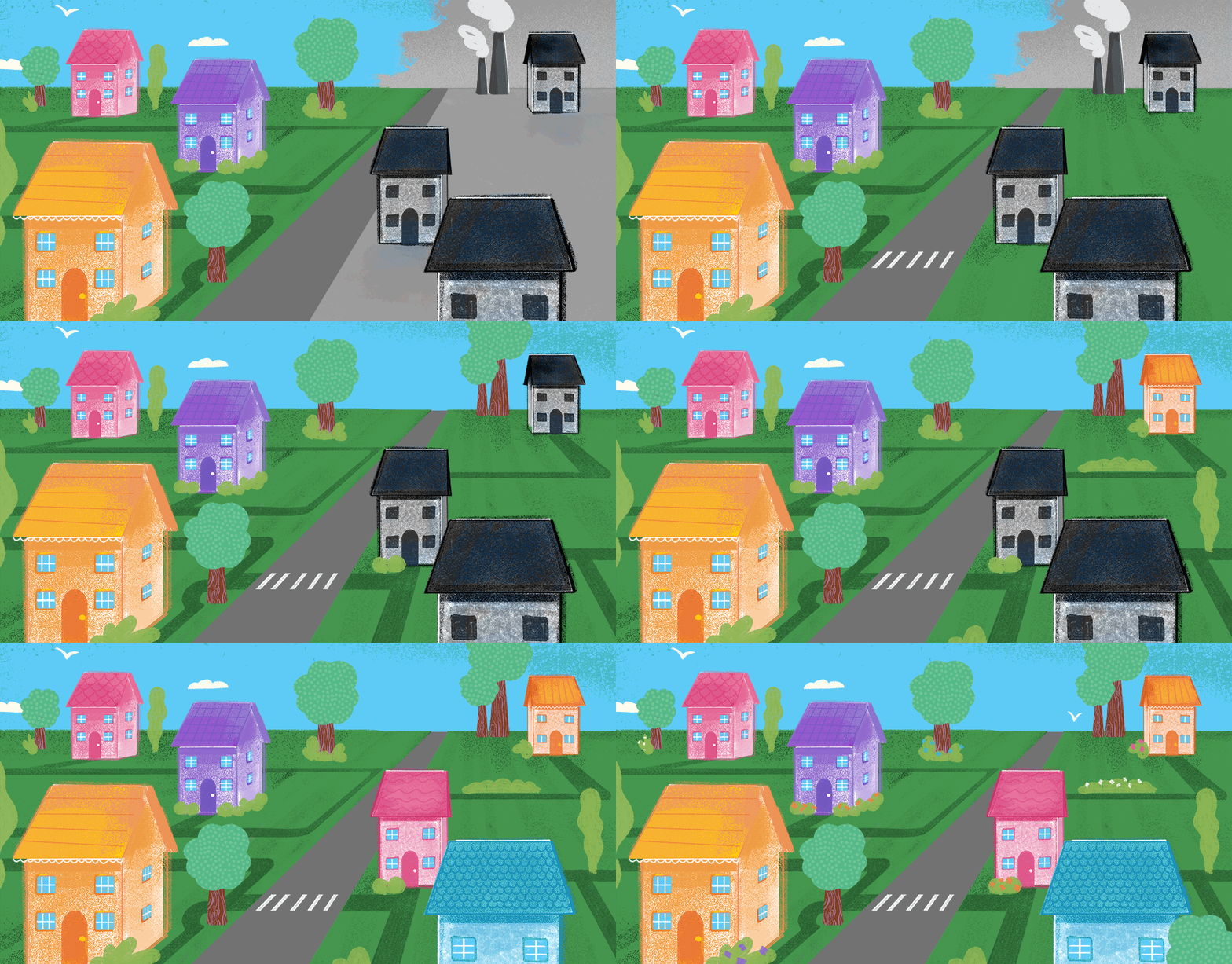
0:05:37.9 I've seen firsthand, and through my research, what happens when a rural community loses its hospital. Let's walk through what that can mean not just for access to care, but for the entire community's viability. Indeed, what we see is that after a hospital like the Tennova hospital closes, individuals must travel extremely far distances to the next available care. For people who are fortunate enough to have private insurance, the next closest hospital was over a 20-minute drive away in Mississippi. However, for those who were receiving their health insurance from Tennessee's Medicaid program, the next closest hospital was over 45 minutes away. Imagine having to drive 45 minutes during something like a heart attack or a stroke. What we've seen from research is that such drives can lead to higher mortality and more fatal outcomes related to a variety of different emergency situations. Even if you don't personally rely on Medicaid, these changes can pull rural communities into what I call the rural health spiral. Outside of health, the closure of the McNairy hospital also had a variety of economic effects. What we observe is that communities that lose their hospital tend to experience spikes in unemployment, lower overall incomes, and it can begin a process of economic spiral that's hard to recover from.
0:07:02.8 Many prospective employers aren't exactly keen on locating new businesses, factories, etc., in communities that don't have hospitals for their employees. When a community loses a hospital, it also tends to lose jobs, lose population, and suffer in a variety of ways. This creates a negative feedback loop that stresses out all residents, from their mental health to the overall well-being of the community. Further, when the hospital is lost, it creates a spiraling effect that ripples throughout the economy. Without a hospital, folks must spend more money to get to care, which can lead them to spend less money supporting other local businesses. When populations decline following hospital closures, there are fewer people to engage in the local economy or be productive members of their community. This can further erode the infrastructure available to all people. It doesn't matter if you're enrolled in Medicaid. A heart attack or a stroke, increased distance to care, and declining economic fortunes for a community affect everyone, not just those who are enrolled in Medicaid. When the hospital closes, the community suffers in terms of health, immediate economic outcomes, as well as their long-term future.
[music]
0:08:28.0 We've already seen what happens when states expand Medicaid compared to those that don't. Here's what the research shows. Since the Affordable Care Act allowed states to expand Medicaid, we've observed almost no rural hospital closures in the states that actually did so. However, in the states that chose not to expand Medicaid, the opposite has happened. Over 70% of closures since the ACA was enacted have been in non-expansion Republican states. This underscores Medicaid's role as a financial stabilizer for rural healthcare infrastructure. Given the important role for politics and policy, this raises a question: why do politicians sometimes support policies that can harm their own constituents?
0:09:14.0 Part of this is because healthcare is such a complex political issue. Voters find it hard to connect policy outcomes to specific political actors and policies in a variety of domains, and healthcare is especially like this. The American healthcare industry is incredibly complex to navigate, and as a result, voters have a hard time assigning credit or blame to those responsible for their outcomes. This contributes to what I view as core to the rural health spiral. When rural Americans lose access to healthcare, they're irritated vaguely at the government. Their trust in government fades. As the Republican Party has cemented itself as the anti-government party, these experiences asymmetrically advantage Republican politicians and candidates, regardless of what the policy realities are on the ground. When one party can benefit from voter anger, they're not incentivized to provide solutions for these problems. If anything, their focus is redirected to gathering support from the very real frustration being experienced by these voters. When solutions aren't enacted and problems worsen, and politicians gain from worsening problems, we see the core aspects of the rural health spiral.
[music]
0:10:39.0 Even if you're not a Medicaid enrollee, these cuts should be concerning for all who care about health and the future of rural America. Medicaid is a program that is popular for Republicans, Democrats, and independents. Those who are enrolled in Medicaid are especially supportive of its continued existence and expansion. Medicaid is critical to promoting rural economies and rural health all over the country. Policy decisions to cut Medicaid, make it more restrictive, or harder to access will ripple far beyond those who are directly enrolled in the program and have sizable effects for rural communities. It's important for all of us to pay attention to the changes that are currently being enacted in the Medicaid program.
[music]
0:11:29.0 Such big changes to Medicaid can feel beyond our control, but there are meaningful ways each of us can respond individually and as a community. First, consider your voice as a voter. Pay attention to where candidates and elected officials stand on Medicaid and on rural health. Bring these issues up at community meetings and make healthcare policy part of your decision at the ballot box not just for yourself, but for your neighbors. Second, support each other locally. Rural communities are strongest when they look out for one another. Help connect vulnerable neighbors, especially elderly people, pregnant people, or those with chronic conditions, to local clinics, support groups, and assistance programs. If you can, support or volunteer with organizations that keep rural healthcare afloat, like clinics, food pantries, or other local advocacy groups. Finally, if you're a rural resident, plan proactively for your health needs in changing times. Know your nearest healthcare options, ask your providers about telehealth, and keep contact info for local resources handy. Staying informed and connected can make a real difference, especially as services come under strain. No one person can solve the rural health spiral alone, but every active engagement whether it's by voting, supporting your neighbor, joining a local advocacy group, or planning ahead for your own health adds up.
0:12:50.5 Together, we can ensure that rural communities don't just survive these coming changes, but find new ways to thrive. Policies like these aren't just budget lines, they're decisions that shape lives and futures in every corner of our country
[music]
0:13:11.0 Thanks for listening to this episode of Population Healthy from the University of Michigan School of Public Health. Visit our website population-healthy.com for more resources on the topics discussed in this episode and to find more episodes. Population Healthy is produced by Crissy Zamarron with support from Destiny Cook and Anne Reilly. If you enjoyed the show, remember to subscribe, rate, and review wherever you listen to podcasts, and consider sharing this episode with friends.