Writing public health for the public: Stories that change minds
Listen to "Writing Public Health for the Public: Stories That Change Minds" on Spreaker.
Subscribe and listen to Population Healthy on Spreaker, Apple Podcasts, Spotify, YouTube, or wherever you listen to podcasts!
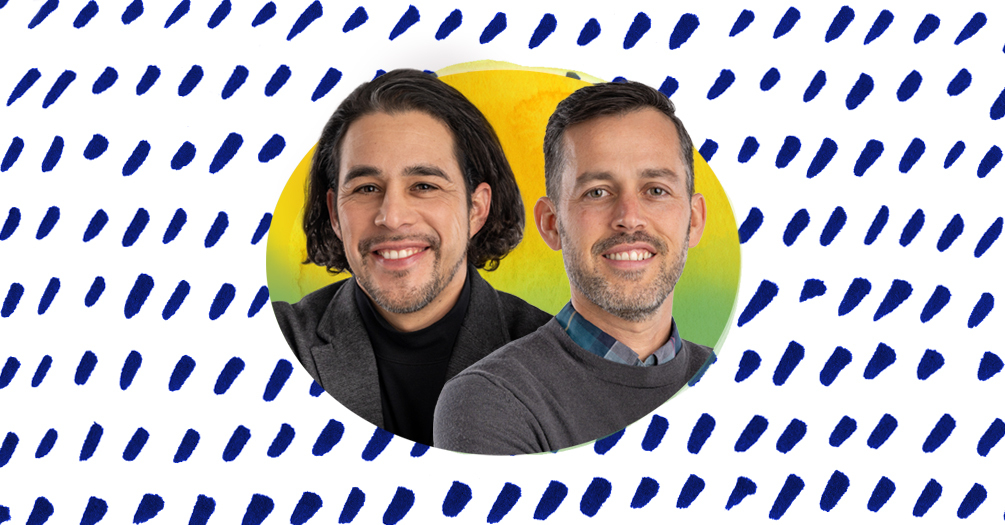
University of Michigan School of Public Health faculty William Lopez and Paul Fleming have a candid conversation about their recently published books and what it means to communicate public health in an era of mistrust and misinformation. They explore how books can be a powerful way to share public health ideas beyond academia, offering space for storytelling, context, and connection.
They also discuss the challenges of writing for public audiences, including ethical storytelling and translating evidence into clear language. Their conversation highlights lessons for students and practitioners, and why public health communication matters now more than ever.
In this episode
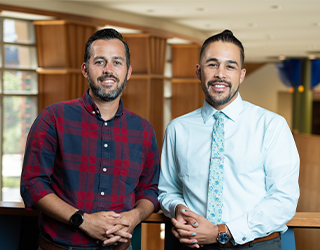
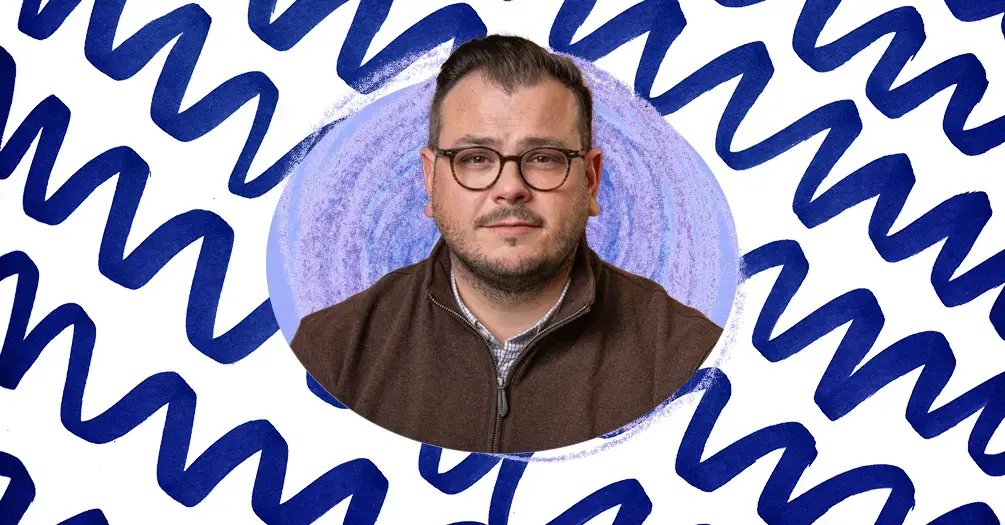
PAUL FLEMING(on the left)
Associate Professor of Health Behavior & Health Equity, University of Michigan School
of Public Health
Paul Fleming’s research and teaching focuses on the root causes of racial health inequities
and strategies to address them. In this work, he partners with community-based organizations
and community organizers to help bring equity and anti-racism principles into practice.
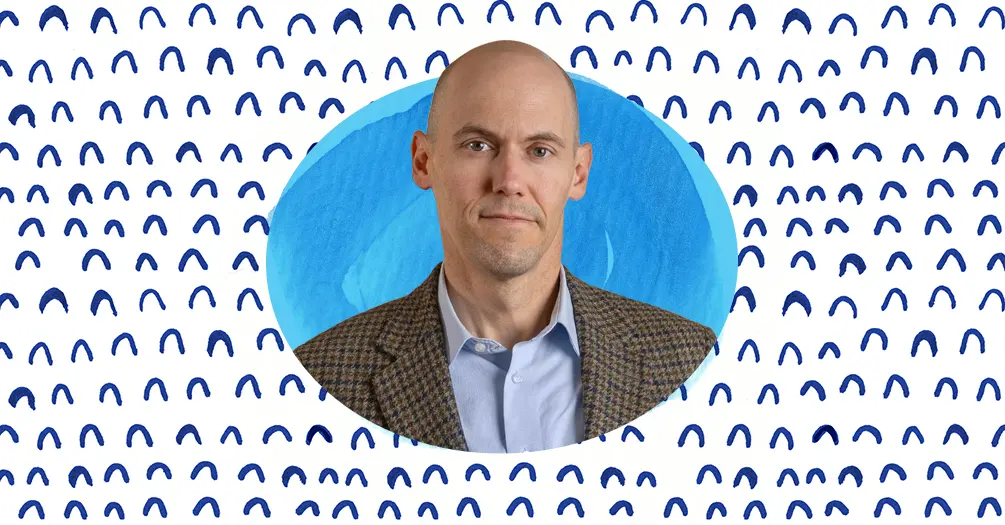
WILLIAM LOPEZ(on the right)
Associate Chair and Clinical Associate Professor of Health Behavior & Health Equity,
Senior Advisor for Poverty Solutions, Faculty Associate for Latina/o Studies Program,
University of Michigan
William Lopez's work and advocacy focuses on the health impacts of law enforcement,
including surveillance, arrest, incarceration, and deportation, in communities of
color. He has been fortunate to collaborate both in his research and advocacy with
the Washtenaw Interfaith Coalition for Immigrant Rights and Synod Community Services,
which operate the Washtenaw County ID Program.
Related Content
- Imagine Doing Better: Why Policies Backfire and How Prevention Thinking Can Change Everything by Paul Fleming
- Raiding the Heartland: An American Story of Deportation and Resistance by William Lopez
- Separated: Family and Community in the Aftermath of an Immigration Raid by William Lopez
Episode transcript
For accessibility and convenience, we've provided a full transcript of this episode. Whether you prefer reading or need support with audio content, the transcript allows you to easily follow along and revisit key points at your own pace.
0:00:02.0 Hello and welcome to Population Healthy, a podcast from the University of Michigan School of Public Health. Join us as we dig into important health topics, stuff that affects the health of all of us at a population level.
[music]
0:00:36.6 Bill Lopez: Welcome to Population Healthy from the University of Michigan School of Public Health. I'm Bill Lopez, a Clinical Associate Professor of Health Behavior and Health Equity. Today I'm joined by my friend and colleague in the Department of HBHE, Paul Fleming. Hi, Paul.
0:00:43.6 Paul Fleming: Hi, Bill.
0:00:50.5 Bill Lopez: We've both recently published books rooted in public health work, and we want to talk honestly about what it takes to put your work out there in the public, especially in a moment when public health is being challenged. Challenged through misinformation, through political attacks, and through threats to programs and funding. We just want to share some of our behind-the-scenes insights in this conversation about communicating evidence and experience to a broader public. Why books? Why now? Here are some of the things we learned and here's why it matters.
[music]
0:01:32.0 Bill Lopez: So before we get to the bigger questions about getting this work into the public, Paul, let's give listeners just a quick version of what our books are about. I'll go first. My book is called, 'Raiding the Heartland: An American Story of Deportation and Resistance.' On the simplest level, this book is about what happens to communities when they experience what we'll call mass deportation efforts. But it's not only about the harms that befall these communities, but as the title says, how communities resist, how they push back about members of their families and their neighborhoods being removed and being deported.
0:02:08.3 Bill Lopez: I wrote this book because I thought it was important to tell a larger story both about what deportation looks like, that is the harms, the public health harms that happen to communities experiencing deportation, but also what it feels like to experience and strategize and think about how you prevent those kind of harms from happening. When talking about deportation, we focused for so long on the harms. This is appropriate. It's part of our work in public health. But part of what we also talk about is how we organize and strategize to mitigate those harms. What about you, Paul? What is ‘Imagine Doing Better’ about?
0:02:46.3 Paul Fleming: ‘Imagine Doing Better’ is ultimately trying to provide a hopeful roadmap for leaders and doers and other advocates in their communities who really want to transform either their organizations, their communities, and boldly transform the world. The full title is, 'Imagine Doing Better: Why Policies Backfire and How Prevention Thinking Can Change Everything.' And one of the things that I really try to do is bring some principles and ideas from the field of public health, break it down into its basic pieces, and talk about how we actually apply that to our entire society, thinking about rebuilding our society to one that enables everyone to thrive. And I wrote the book because I think public health has a lot of powerful tools to offer, not just for improving health, but actually for changing the world. And so the idea is that through the book, I tell stories and I talk about some complex concepts, but in hopefully a simple way. And that should help the reader gain the tools and the perspectives that's gonna help them have an impact in their own spaces.
0:03:52.4 Bill Lopez: Yeah, I love it. I was lucky enough to read Paul's book before it was published, so I had a sneak peek into what you were talking about, Paul. And one of the things I liked most about it then and like most about it now is that you aren't scared to take on that really big idea, right? I heard you say "change the world" as you were describing your book. So both of us decided on books as opposed to other formats. You talk about this big idea of changing the world. Is a book needed to discuss an idea that is that big?
0:04:28.8 Paul Fleming: Yeah. Well, and since we're friends, you've probably heard me talk about changing the world a thousand times over the last year. But one of the things I think is we shouldn't shy away from our bold ambitions. We shouldn't shy away from being clear about what we're trying to do. And for a while I felt a little embarrassed, like saying that you wanted to change the world was naive or was somehow not you weren't taking things seriously. But the reality is I think anybody who is in a field like public health or is interested in making their communities better fundamentally is about changing the world. And I think what a book can do is really allow people to sink their teeth into that idea, swim around in it, see where their role is. And a simple social media post or even an academic journal article, that doesn't do that for people. And so what really drew me to writing a book was having the opportunity for myself to wrestle with some of these ideas and really try to bring up all these different ideas together under one roof that I consider the book. But also for readers thinking about... Spend some time in this place thinking about what is the world you want to build and what are the tools that we need to be able to do that. So that's how I came to it. But I'm curious from yours, while our books have many similar themes, yours is a very different book. And I, of course, read your book as well and found it extremely powerful. So how did you think about coming to a book format to tell these stories?
0:06:06.5 Bill Lopez: I think you worded it well. It gives you time to explain an idea or a concept or a phenomenon and give the reader the opportunity to swim around in that idea. Because that is something that I was hoping to do with a book. You create the setting, you select the dialogue. We will call them participants in studies, perhaps you call them characters in books, but you're selecting the voices you're placing in your book. And it allows you an opportunity to be so much more immersive than any other writing style. For me, that was really important. And I say for me, but what I actually mean is that what I wanted to do was write about this phenomenon of mass deportation happening in rural communities in the states away from the southern border, because not very many people know about it outside of the folks in those communities. And why don't folks know about it? For many reasons, including it doesn't stay in the news very long or it doesn't linger in the news. I wanted the reader to understand that deportation in an area that is 8% Latino, that is 5% Latino, that is less than 10% immigrant, looks really, really different than deportation that happens in predominantly Latino or immigrant communities. I'm from San Antonio, from Texas, so I grew up in majority-minority communities. And the book allowed the opportunity to describe, like, this is what the Midwest looks like, this is what the Midwest looks like for Latino immigrants, and this is what deportation looks like when you don't have the extensive network, when you don't have the majority of the population to support you. And consequently, this is in these settings are when we need to depend most on allies across race and across class and citizenship status, of course. So I think one of the reasons I wanted to allow the reader the opportunity to better imagine what the world might be like for someone who experiences these kinds of deportation efforts.
0:08:15.6 Paul Fleming: One of the things that both of us touched on was we kept referring to sort of the readers of our book. And I think one of the interesting things, the conversations you and I have had over the years is how thinking about your reader and the audience that you're reaching when you're talking about a book is very different than the audience that you're reaching or your presumed reader when you're talking about an academic journal article. And so I'd love for you to kind of just share how you think about audience and who you get to reach by the nature of writing a book. I think for me, this is my first book. For you, it's your second one. And I'm not sure I fully understood the ways that a book opens so many doors to different audiences. It gives you the tools to be able to talk about things in ways that resonate with new audiences. For me, there's a real power in that recognition that we need to be speaking beyond just our academic audience. I think you and I have always known that, but it's actually a whole another thing to build the skillset to be able to do that thing. And I think writing a book, what I've realized has helped me get some of those communication tools to better lay out issues and stories that resonate with a wider range of people. But how do you think about that question of audience?
0:09:34.0 Bill Lopez: I love the question of audience because you're right. When you think about who reads your academic articles, and I'll think about when we are the reader, when I am the reader of an academic article, do I read it from beginning to end? Perhaps not. Usually I'm looking for one particular... I want to see what the method is, I want to see what the result is. Frequently I'm reading the abstract, right? And as an author of academic articles, I am in no way offended if someone is selectively reading my articles. The purpose was not necessarily to keep their attention beginning to end, right? The purpose is to give a data point, an argument, et cetera. But when you write a book, you realize that the feedback you never get in the academy is, "Will this keep their attention," or, "Was this at least moderately entertaining?" You've never really thought about that in the same way in academic writing because it wasn't the same purpose, right? And so when you start writing to a public audience, that's one of the first questions you ask is who's going to read this? Will they put it down after the first chapter? Will they get bored in my introduction? And how do I change my writing because of that? I'll tell you the truth too, Paul, and I wonder what you think about this, but COVID-19, the pandemic, in addition to upending many other aspects of our world, it certainly pushed me to understand that data and evidence are only one thing that the public cares about. And sometimes they may care about it far less than we expect or than we'd like to believe, and that it's not simply data and evidence, nor the preponderance of data and evidence that's going to change behaviors or shift people's mindsets. Something else besides that has to be available too. Not to say that you and I and others in public health don't root our writing in empirical evidence, but we can't just show data and evidence. I'm wondering if you had a moment like that too where there was kind of this eye-opening moment where, oh, scientific journal articles alone won't shift the public mindset.
0:11:45.1 Paul Fleming: Yeah, I don't know that I can pinpoint a moment, but that really resonates with me. I think a lot of academics or data-minded people like to ignore their own personal story because how many things have you struggled with changing your own behavior even though the evidence points to something different, right? That we should adopt this behavior, but we just don't for a variety of reasons. And then if you think about your own behavior change stories or things that prompt you to act, it's things that you feel in your heart, not in your head, right? And when you're trying to change the world, you need to engage with people's hearts. You need to bring people along. And so I think a lot of our training in public health rightly focuses on creating data points that can help us understand an issue and unpack an issue. And that is vitally important. I think the key is that that has to be paired also with the stories and things that call to people's heart, because the true power lies in bringing that human emotional quality with the data and the science. That's where we see the transformative change.
[music]
0:13:02.5 Bill Lopez: Paul, let's talk a little bit about the current climate. So we put these public health books out in a particularly, we'll say, turbulent climate for our field.
0:13:14.4 Paul Fleming: That might be putting it mildly, but yes, yes, turbulent.
0:13:17.6 Bill Lopez: Might be putting it a little bit mildly, correct. Yeah. So why did you feel like the book needed to come out now?
0:13:26.5 Paul Fleming: It's a great question because it comes up a lot, and I'm sure you've had a similar experience with yours. What people sometimes forget is how long the book process is. So I did not plan to put out a book in a turbulent time for our field and our country. Of course, I did start writing it in sort of more or less the middle of the COVID pandemic, so there was... It's not to say that we were just kind of at peaceful ease in the world when I started writing it. But I think what's felt important to me about the book coming out in this moment is that I do think it has things to offer people who are struggling in this moment. People within public health who are struggling with, “Where does the field go from here?” But then also just the more general audience of folks who are looking around at what's going on in the world. They're seeing increasing political polarization, they're seeing climate catastrophe, they're seeing dehumanization happening, and they're thinking to themselves, "What do I possibly do in this moment?" I'm hearing from a lot of folks in my network just sort of either paralysis or burnout, losing hope, right? And so what's felt meaningful to me is that folks who do read my book will reflect back to me and say, "I found your book to be really hopeful. I felt like it gave me tools and resources I could use to take the next steps forward." And that's ultimately how I think about this moment. It's not clear at all where we all go from here collectively. It's not like there's a path laid out in front of us. But what is clear is that we all need to be taking steps forward and feeling towards that path, taking sort of the right next step. And so I think some of the ideas in the book help us do that, help us take those steps forward even if we're not sure exactly where it's gonna have us end up. But that's kind of one of the interesting things about it coming out in this moment, because a lot of the book was actually written in 2022, 2023, right, before we're in the moment we're in now. How about you? How do you think about it coming out in this moment?
0:15:37.8 Bill Lopez: I love the point that you made that it perhaps grants us a little bit more strategic influence than we had to say, "That's the moment I want my book to come out in," 'cause you're right. I mean, you're writing for many, many years. So my book looks at six large-scale worksite raids that happened in 2018. And in 2018, this was before the phrase "mass deportation" had really entered into the public vocabulary, right? But it ended up being some of the best examples, or rather unfortunate, illustrative example, I'll say, of what mass deportation would look like in a community. You know, what I would add to your response is that 80%, 85% of the piece is gonna happen, because that's how long it takes to write. But then we are carefully crafting that last 15%, framing it within current events. And one thing, and I know you can speak to this too, that I wasn't expecting about writing a book is that it gives you a microphone in a way that writing an article never did. And what I mean by that is you can write many, many articles and people will ask you specifically about those articles, and you're an expert on those details. You write a book and people will ask you anything. And if you're lucky, it pertains to the topic of the book. So while I may not have strategized about the exact moment in which the book came out in the world, I make conscious decisions all the time about, well, now this is the story that I want to tell to the media. This is the story that the public is missing from what they're seeing through coverage in the media. So that I do do with some sense of urgency. Do remember that we didn't know who was, of course, who was going to be elected prior to Trump two. And then when Trump was elected, I finished it as quickly as I could so it would come out in the beginning because it was extremely relevant to what was going on at the beginning when we saw a couple of worksite raids, including in Ellabell, Georgia, and unfortunately, ICE and CBP activity in cities like LA, DC, and Minneapolis.
0:17:43.3 Paul Fleming: It is not only informing, but some of the stories that you write about in the book are very closely related to the stories that people on the ground are experiencing today. And now that the book is out in the world, you have the opportunity to connect the dots for people. So even if you're writing a story that you didn't know was gonna come out in this context, you've been able to use the platform to do that and actually help the public understand what's going on because you know what happened previously so well. So I think that platform that books give you is an important one.
0:18:22.4 Bill Lopez: And this brings us back to why public health books, right? Rooted in public health, as we said at the beginning, right? Even though I'm writing about a series of events that happened in 2018, the public health analysis is there. We are building on how people stay healthy. Public health evidence shows us that to be healthy and happy, you need to be able to move about your community, use your community sidewalks and roads, go to your community's medical facilities, and be with your family, right? That's fundamental public health theory and framing. I didn't have, and you didn't have, a public health theory section. Instead, what we did is try to weave that throughout the book so that the reader didn't even realize they were getting public health theory until it was too late. Realized, "Oh, this is something I didn't know that I'm aware of now, how this health phenomena works."
0:19:10.8 Paul Fleming: Yeah. Because I'm a public health professor, some folks like to sort of pigeonhole my book as a public health book. And one of the biggest compliments I can get is when a reader says, "Well, I actually didn't think that was really about public health." And I'm always like, "It's not. It's about actually everything, and it does draw on public health concepts." But I think we've talked a lot about sort of the power and the opportunities of publishing a book. What are some of the challenges or things that people would need to almost get over? What steps do people have to do? How do they have to think about the process? Do you have any recommendations or ideas for folks?
0:19:50.3 Bill Lopez: Yeah, I like that you said, "What do we have to get over?" I heard that. I caught it. Yes. 'Cause you're right.
0:19:58.0 Paul Fleming: You know me well.
0:19:59.0 Bill Lopez: What are the things that you're scared of putting on paper, of pen to paper? And I teach a public health storytelling class, and lots of the class is actually just working through what it feels like to be emotionally vulnerable and writing a different format. What are the roadblocks of my writing securities and insecurities standing in my way? It's one of my favorite parts of writing is that back and forth between working through your own stuff and gaining the actual concrete tools you need to do the task at hand. If I were to give one piece of concrete advice to get something from beginning to end, it's the advice no one wants to hear. But the advice that's totally essential is that the secret to writing is writing. And you don't want to hear it. You really want to outline, you really want to reflect, you really want to journal all critical pieces of writing. But at the end of the day, it's pen to paper for a number of hours, and that's the way it's got to be. What would you say? What's one of your biggest pieces of advice for writing something of this size?
0:21:03.0 Paul Fleming: Well, and I want to first give you props and thank you as a friend, 'cause you're the one that helped me get over a lot of my stuff and a lot of the mental hurdles I had about doing this work. And a lot of it has to do with the way we've been socialized as public health scholars, how we have been trained to think about what information is valued and what isn't. Part of it for me was stripping away this need to cite every single thing that I am saying. Now, don't get me wrong, my book has a lot of citations, and every fact that's in there has a citation behind that. And that's important to me. And also to be an effective writer and storyteller, you need to tell the story, not get hung up on every single detail in a way. You need to lean into the emotions of characters and describe people and places. And you don't really always cite that. That's not... But you can start to question like, "Well, do I have a citation that says that the room was painted beige? I don't have a citation, so can I say that?" And the reality is, yes, it's from your memory, it's from your notes, it's from whatever, right? And so there is a little bit of the training that I think we have to strip away in some ways. The other thing I want to recognize is, you and I are talking a lot about books in this conversation, but in many ways, there's a lot of different avenues to do this type of thing that we're talking about, of storytelling and connecting with a broader public audience. I think of podcasting as one way, social media can be that, op-ed type writing can be that as well, doing public events. So just to say for the audience, there's a lot of different ways you can lean in.
0:22:48.1 Bill Lopez: I love that you mentioned that some of our training might not be helpful when we're trying to do a different kind of writing. And I always remind folks that when we're trained as students, every opinion of our work we get matters. Our professor grades our paper, and then later we have a dissertation chair and committee members, all of their opinions matter, all of their feedback matters. And as we're publishing, we have four article reviewers in the good old days. Now we usually have one or two maybe, but we have two reviewers and everything they say matters, right? And it takes a long time to understand that if you're gonna write for the public, you have to be willing to get a lot of feedback. And you have to admit that not all of it's gonna matter, right? Like you can't let it get to you when you get negative feedback or even when you get disparaging comments about your work, because it's gonna happen. It means your readership is wide. But we're not prepared for that. We're prepared to believe every time we get feedback that it matters. And I had to retrain myself to understand that, no, I want to get lots of feedback, positive or negative, because that means the readership circle is expanding, right? And they're hating on things that I didn't consider and that probably aren't worth considering, and they were always gonna hate on it. But at least they're learning a little bit about public health.
[music]
0:24:16.0 Paul Fleming: So one of the things about reaching into public audiences in this particular moment is we have a lot of people in the public that feel a lot of different ways about the field of public health, about specific aspects about public health. You and I are academics. There's widely varying views and trust in academia at the current moment, widely varying views about trust in the field of public health. A question for you is, how do you think about your work within that context? Are you trying to reach people that already agree with the perspective you have? Are you trying to reach beyond that group and talk to a broader audience? And maybe even a bigger question of what do you think our role in public health is in this moment where there is so much distrust in the world?
0:25:07.1 Bill Lopez: Yeah, you mentioned earlier how folks often don't know how to place your book, right? Is it a public health book? Is it not? And I think sometimes that works to our advantage. We always talk about how public health is working best when you don't know those public health systems are in place. That means nobody's getting sick, for example. And I think people with preconceived views of public health, people who do not trust the academy or trust public health specifically, don't immediately see my book as a public health book. And I think I use that to be able to use these ideas without butting up against their preconceived notions of what public health is. That being said, it's very clear that it's an immigration book. So people with preconceived notions about immigrants and immigrant communities and deportation, yeah, they're going to have preconceived notions coming into the book. It's always a question of whether we're trying to change new minds or strengthen the beliefs of folks who already have a given set of beliefs. And I think one of the beautiful things about writing a book is you do get to stretch the audience a little bit more. When I come into my writing, I come in much more with the perspective that if you've never cared about a given health issue, in my case deportation, until today, then today is the perfect day to start caring about that issue. So sometimes it's changing minds, usually it's shifting people a bit closer to the public health understanding of these issues. And often I think it's informing, educating, and perhaps adding context, story, and feeling to folks who have never considered a particular phenomenon at all, in this case who have never considered mass deportation at all. Go ahead, what about you?
0:26:51.3 Paul Fleming: It actually makes me think about your book and some of the really strong storytelling and character building that you did with the people that you met through your work. Those people that you described don't fit neatly into one category or another. They're complex characters. And I think that's the other thing we need to remember. Yes, of course, there are some people in our world with very extreme views. If you go on social media, you feel like things can be very black and white and very divided and polarized. We need to remember that people are very complex with complex views. They may have certain political views, but then they also have a personal connection. And so there is room for change. I think what is a dangerous place to be in as the role that you and I have in public health is sort of writing off people or writing off whole populations as unreachable or as unable to understand the things that we're talking about. And so I do think it's certainly a challenge to reach certain folks that are coming with very divergent views. But I do think that it's something that we need to try and we need to think about, how do we write and communicate in a way that does speak to people in our hearts so that they don't have that immediate knee-jerk reaction to, "Oh, this is public health and I've already decided what I think about public health," or, "Oh, this is immigration and I've already decided what I think about it." And so that's the challenge we have as writers, but it's also I think a bigger lesson for us in public health about how do we think about connecting with everybody in the public? Because at the end of the day, the public means everybody, whether we like it or not. Everyone in our community deserves a right to be able to live happy and healthy. And so we need to figure out ways to bridge those divides when we can.
0:28:44.1 Bill Lopez: We do. Our job is not to care for people who share political ideals or subscribe to a particular way of thought, but our job is to keep everyone healthy and happy and fulfilled.
[music]
0:28:59.2 Bill Lopez: Paul, we are both professors. We both love teaching. What message do you have for public health students who are seeing the field get attacked right now? What do you want them to know about the field of public health as they're deciding to enter or to stay in the field?
0:29:14.5 Paul Fleming: Yeah, for folks who are either current students or thinking about going into the field, thinking about studying public health, I still think public health is the coolest possible field you can choose.
0:29:26.4 Bill Lopez: Same.
0:29:27.1 Paul Fleming: And so we can't lose sight of that. Public health plays such a vital role because we want to change the world so that everybody can be thriving, everyone can be healthy. Whether it's using data, whether it's using communication, whether it's using organizing, I think a lot of that story is getting lost in the noise about debates over vaccines, about debates over who needs to wear a mask, what was going on in the COVID-19 pandemic. And so I would urge folks to not lose sight of that bigger picture of the power of the field of public health and what it is we are trying to do. And I also write about this in the book as a vital part of being a changemaker is that we need to come at it with a long-term perspective. We are in an acute moment right now. Nobody knows how long this acute moment will last, but public health is going to be needed in this world. People who take an equity-minded approach to public health is going to be needed. You are going to be needed. We are going to need you, the person who is studying public health, you, the person who is interested in public health, we need your unique talents, we need your unique skill sets to help move us forward, to help bridge these divides and improve our communities. There's a space for you to play a vital role and you just need to step into it. And I think that's how I think about our students. And I hope everyone who's thinking about public health can take that perspective. What about you, Bill? What's your advice in these tricky times?
0:31:00.2 Bill Lopez: Well, I'm getting inspired by your words, Paul. I want to go back and study public health all over again. I think that the field of public health has always existed and will always exist. It's taken many different forms. But I think of images of public health, people working late into the night in their kitchen, strategizing about how to take care of their kids. I think about workers who are deciding whether to go on strike because of unjust conditions in the field. This is all public health. Now, we have had a period where it's been well-funded and well-supported by the government. We're seeing periods where it's not well-funded nor well-supported by the government. And so maybe the face of public health will change. But that just means you need to be more, we need to be more, more creative, right? We need to perhaps work in different ways, we need to collaborate in different ways. But public health has been there before, and public health will be here through and after this and future administrations.
0:32:00.7 Paul Fleming: Very well said. As we wrap up, I hope this conversation makes one thing clear. Public health doesn't just live in journals. It lives in communities, stories, policies, and the everyday decisions that shape people's lives. In a time when our field is under a lot of pressure, communicating well is a big part of the work. If you'd like to learn more about our books and the research behind them, we can share links and resources in the show notes. And if you're considering a future in public health, know that your voice, how you explain, listen, and connect will matter as much as your data.
[music]
0:32:44.4 Paul Fleming: Thanks for listening to this episode of Population Healthy from the University of Michigan School of Public Health. Visit our website, population-healthy.com, for more resources on the topics discussed in this episode and to find more episodes. Population Healthy is produced by Crissy Zamarron with support from Destiny Cook and Anne Reilly. If you enjoyed the show, remember to subscribe, rate, and review wherever you listen to podcasts, and consider sharing this episode with friends.