Saving lives through vaccinations: What you need to know this winter
By Anand Parekh, MD, MPH, FACP
Chief Health Policy Officer & Adjunct Professor of Health Management and Policy
As the nation approaches winter, it's time to talk about protecting ourselves and our loved ones from respiratory viruses through vaccinations. But before we talk about vaccines, let's spend a moment to discuss why these constantly changing viruses even matter in the first place.
As a physician and chief health policy officer at Michigan Public Health, I want to share what we know about flu, COVID-19, and RSV this season. While this information should not be considered medical advice—always consult your healthcare provider about what's right for you—understanding these respiratory viruses can help you make informed decisions.
What's there to know about the flu
Flu is a contagious respiratory illness transmitted mostly by tiny droplets made when people cough, sneeze, or talk.
Approximately 8% (recent range of 3-11%) of people get infected and develop flu symptoms each year. While it can be mild, it's estimated that at least 38,000 Americans died in the 2024-2025 season.
What's there to know about COVID-19?
COVID-19 is a very contagious respiratory illness transmitted mostly by tiny droplets and also very small particles from an infected person's breath.
While COVID-19 doesn't strictly follow a seasonal pattern, it's estimated that there were between 44,000-63,000 deaths over 12 months during 2024-2025.
What's there to know about RSV?
RSV is a respiratory virus that causes cold-like symptoms and is mostly transmitted when an infected person coughs or sneezes or when there is direct contact with someone who has RSV.
It's estimated that there were 10,000-23,000 deaths from RSV during the 2024-2025 season.
Safe and effective vaccines are available
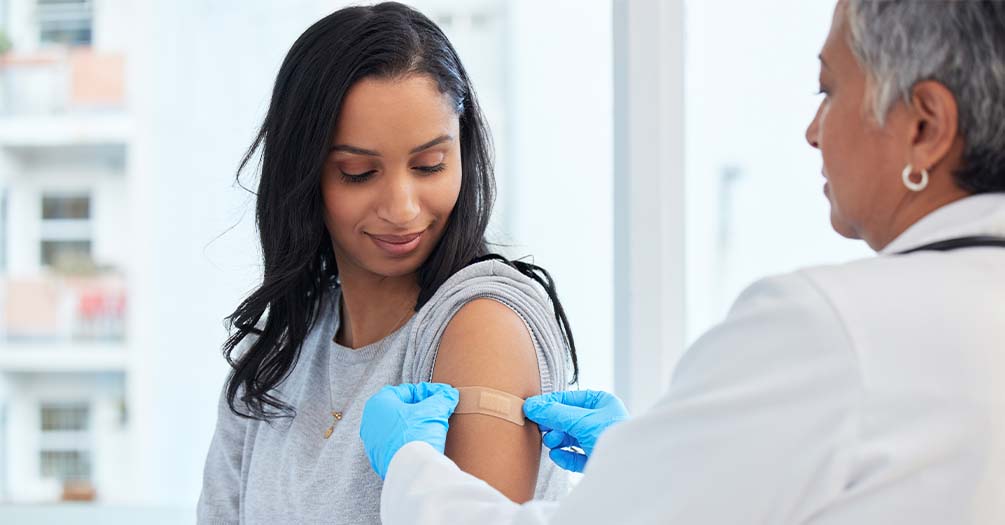
Fortunately, there are safe and effective FDA-approved vaccines for all three of these viruses. These vaccines have been shown to reduce medical visits, hospitalizations, and deaths.
Navigating this year's recommendations
Various medical specialty societies have issued recommendations for this year's vaccines. One challenge many people face is that different organizations sometimes offer slightly different guidance.
The Common Health Coalition has created a helpful resource that compares vaccine recommendations across different health organizations, which can help you understand where guidance aligns and where it varies. When in doubt, talk with your healthcare provider about your individual situation.
One note regarding the COVID-19 vaccine is that the FDA recently changed its label to include only adults 65 and older and people 6 months to 64 years old with conditions that put them at high risk for severe illness. CDC also recommended that the COVID-19 vaccine be given through 'shared clinical decision-making' between individuals and their health care providers. The bottom line is that the COVID-19 vaccine should still be available for all individuals who would like to receive the vaccine.
A holistic approach to winter wellness
Ultimately, reducing suffering from respiratory viruses this winter will require a holistic approach:
- Obtain recommended vaccines.
- Take anti-viral medications if recommended and ill with COVID-19 or flu.
- Maintain the best health possible—eat a nutritious diet, be physically active, and obtain proper sleep.
The bottom line
This winter, these three respiratory viruses will cause serious illness for many Americans. Vaccination can help prevent many of those severe outcomes.
Talk with your healthcare provider about which vaccines are right for you and your family. This article provides information to help start that conversation—not to replace it. Your healthcare provider can give you personalized medical advice based on your specific health situation.
About the author
Anand Parekh is the Chief Health Policy Officer at the University of Michigan School of Public Health and Senior Advisor at the Institute for Healthcare Policy and Innovation. In this capacity, he helps translate the care, practice, and research occurring at the university to policymakers to drive health impact. Parekh is a board-certified internal medicine physician, a fellow of the American College of Physicians, and an adjunct associate professor of medicine at Johns Hopkins School of Medicine.