
Biostatistics Seminars
The Department of Biostatistics at the University of Michigan is proud to invite leading scholars from around the world to visit Ann Arbor to share their expertise, wisdom and experience. All are welcome to attend these seminars, which are held in-person.
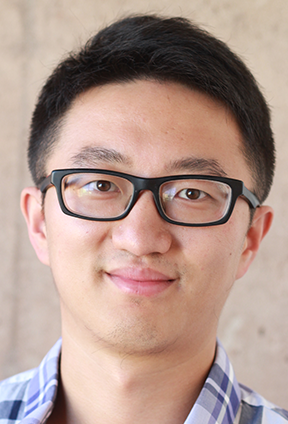
Weining Shen
Associate Professor of Statistics
University of California, Irvine
Learn more about this presenter
DATE: Thursday, September 10, 2026
TIME: 3:30 p.m.
LOCATION: SPH I, Room 1655
TITLE: Statistical Analysis of 3D Path Data in Minecraft
ABSTRACT: Understanding spatial navigation and memory formation is critical to exploring how humans learn and adapt in complex environments. To investigate these processes, we conducted an experiment using the Minecraft Memory and Navigation Task, collecting detailed 3D path data in a virtual open-world setting. Statistically, we developed a novel methodology to convert complex high-dimensional 3D movement data into functional representations, enabling standardized comparisons and analyses across participants and environments. We applied techniques such as functional clustering and regression to identify navigation patterns and their relationships with cognitive map development and memory retention. Our analysis uncovered two significant insights: first, participants who adopted moderately exploratory behaviors during training demonstrated superior retention of object locations; second, inefficient navigation strategies were strongly linked to poorer spatial memory and navigation performance. These findings highlight the effectiveness of our methodology in advancing the study of navigation behaviors and cognitive processes in dynamic 3D environments.
TOPICS: Artificial Intelligence, Computational Statistics, High-Dimensional Data, Longitudinal / Correlated Data, Machine Learning, Predictive Modeling

Jeff Leek
J Orin Edson Foundation Chair of Biostatistics at the Fred Hutchinson Cancer Center
and co-founder and co-CEO at Synthesize Bio.
Fred Hutch Cancer Center
Learn more about this presenter
DATE: Tuesday, September 15, 2026
TIME: 9:00 a.m.
LOCATION: SPH I, Room 1680
TITLE: Inference with Predicted Data: What Do We Do When We Have Machine-Learned Everything?
ABSTRACT: Machine learning and artificial intelligence research is undergoing a “Cambrian explosion” of development, affecting biostatistics across the spectrum—from data analysis and methods development to theory. One intriguing possibility presented by AI and machine learning is the use of predicted data, which is now common in fields ranging from public health and genomics to the analysis of electronic medical records.
TOPICS: To be announced
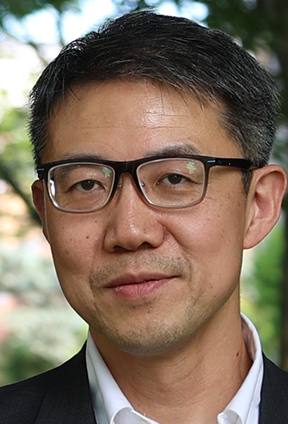
Dacheng Liu
Biostatistician
Boehringer Ingelheim
Learn more about this presenter
DATE: Thursday, September 24, 2026
TIME: 3:30 p.m.
LOCATION: SPH I, Room 1655
TITLE: Clinical drug development: challenges and data science applications
ABSTRACT: In this talk, I will discuss “inference with predicted data” techniques that we developed and that have since grown into a significant new field in statistics. I will highlight inference with predicted data as an area in which biostatistics, machine learning, and artificial intelligence must work hand in hand to enable scientific progress.
TOPICS: Artificial Intelligence, Clinical Trials, Data Integration, Machine Learning, Clinical Drug Development
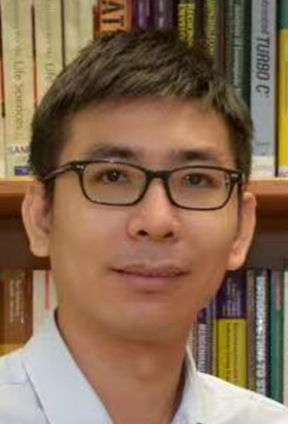
Zhenhua Lin
Associate Professor and Presidential Young Professor of Statistics and Data Science
National University of Singapore
Learn more about this presenter
DATE: Thursday, October 15, 2026
TIME: 3:30 p.m.
LOCATION: SPH I, Room 1655
TITLE: Regression with Complex Data Objects: Geometry and Biomedical Applications
ABSTRACT: Modern biomedical studies increasingly generate complex data objects such as covariance and connectivity matrices, probability distributions, and other observations that naturally reside in nonlinear metric spaces, where standard regression methods based on vector operations are no longer directly applicable. In this talk, I will consider regression from two complementary perspectives. First, when the response is a metric-space-valued object indexed by a scalar predictor such as time, I will introduce total-variation-regularized Fréchet regression, which provides an intrinsic way to recover piecewise-constant structure while respecting the geometry of the response space; an application to task-related fMRI data illustrates its use for detecting changes in dynamic functional connectivity. I will then consider the reverse setting, where the response is binary but the covariate is a metric-space-valued object. Motivated by classical logistic regression, we construct a geometrically defined logistic regression model using distances and angles between geodesics, and apply it to functional-connectivity matrices from the Human Connectome Project to distinguish motor and language-processing tasks. Together, these results illustrate how familiar regression ideas can be extended beyond Euclidean spaces while retaining interpretability and relevance to complex biomedical data.
TOPICS: Imaging, Longitudinal / Correlated Data, Nonparametric / Semiparametric Modeling, Predictive Modeling, Stochastic Models, Brain Functional Connectivity, Complex Data Analysis
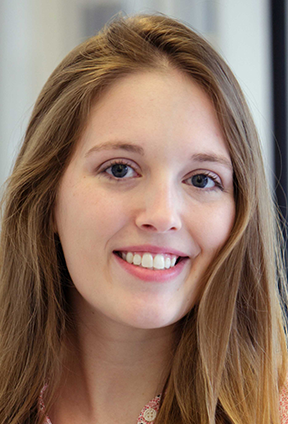
Rhonda Bacher
Associate Professor of Biostatistics
University of Florida
Learn more about this presenter
DATE: Thursday, October 22, 2026
TIME: 3:30 p.m.
LOCATION: SPH I, Room 1655
TITLE: There Is No Single-Cell Pipeline: Statistical Choices and Uncertainty
ABSTRACT: Single-cell RNA-seq analyses require a sequence of statistical choices, including how to represent cellular heterogeneity, identify cell states, infer trajectories, and test for differential expression. These choices are often treated as computational details, but they can substantially influence biological conclusions. In this talk, I will discuss three projects that address different stages of single-cell analysis: ESCORT, scLANE, and scDEcrypter. Together, these methods illustrate how statistical modeling can make single-cell analyses more interpretable while quantifying uncertainty in analysis and downstream inference.
TOPICS: Autoimmune Diseases, Cancer Research, Chronic Diseases, Diabetes, Genetics Research, Genomics Research, Statistical Genetics
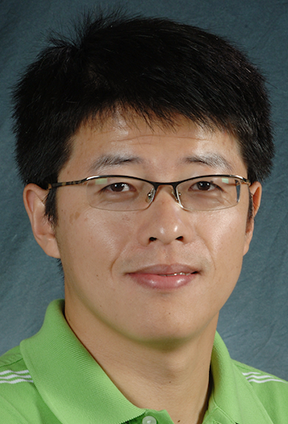
Yufeng Liu
John D MacArthur Professor and Professor of Statistics
University of Michigan
Learn more about this presenter
DATE: Thursday, November 05, 2026
TIME: 3:30 p.m.
LOCATION: SPH I, Room 1655
TITLE: To be announced
ABSTRACT: To be announced
TOPICS: To be announced
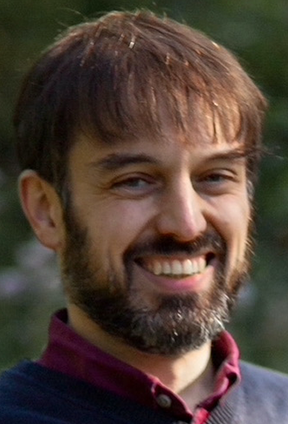
Matthew McCall
Associate Professor of Biostatstics, Computational Biology, and Biomedical Genetics
University of Rochester Medicine
Learn more about this presenter
DATE: Thursday, November 12, 2026
TIME: 3:30 p.m.
LOCATION: SPH I, Room 1655
TITLE: Statistical methods for microRNA sequencing data
ABSTRACT: MicroRNAs are a class of small (18-24 nucleotide) RNAs that are essential regulators of gene expression, which act within the RNA-induced silencing complex (RISC) to bind mRNAs and suppress translation. Alterations in microRNA expression have been shown to disrupt entire cellular pathways, substantially contributing to a variety of human diseases. Despite nearly 25 years of research, microRNAs remain difficult to measure due to their short length, relatively small number, sequence similarity, and difficulty to isolate from other small RNA fragments. The majority of recent studies use small RNA-seq (also called microRNA-seq) to quantify microRNA expression because it allows for the quantification of isomiRs (microRNA isoforms) and the possibility of identifying novel microRNAs. Statistical analyses of microRNA-seq data are typically performed using methods developed for mRNA-seq data despite the fact that microRNA-seq data violate several of the assumptions of these methods. We propose new statistical methods for preprocessing and analysis of microRNA-seq data that are tailored to the specific complexities of these data.
TOPICS: Bayesian Statistics, Bioinformatics, Genomics Research, High-Dimensional Data, Machine Learning
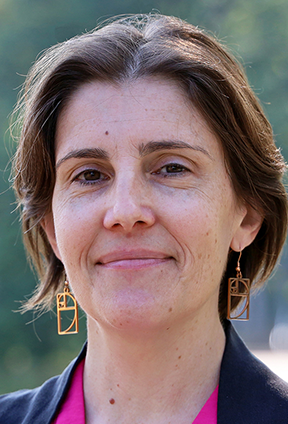
Rebecca Andridge
Professor of Biostatistics; Associate Dean for Undergraduate Studies at the College
of Public Health
The Ohio State University
Learn more about this presenter
DATE: Thursday, December 03, 2026
TIME: 3:30 p.m.
LOCATION: SPH I, Room 1655
TITLE: To be announced
ABSTRACT: To be announced
TOPICS: To be announced