
Projects in Chile
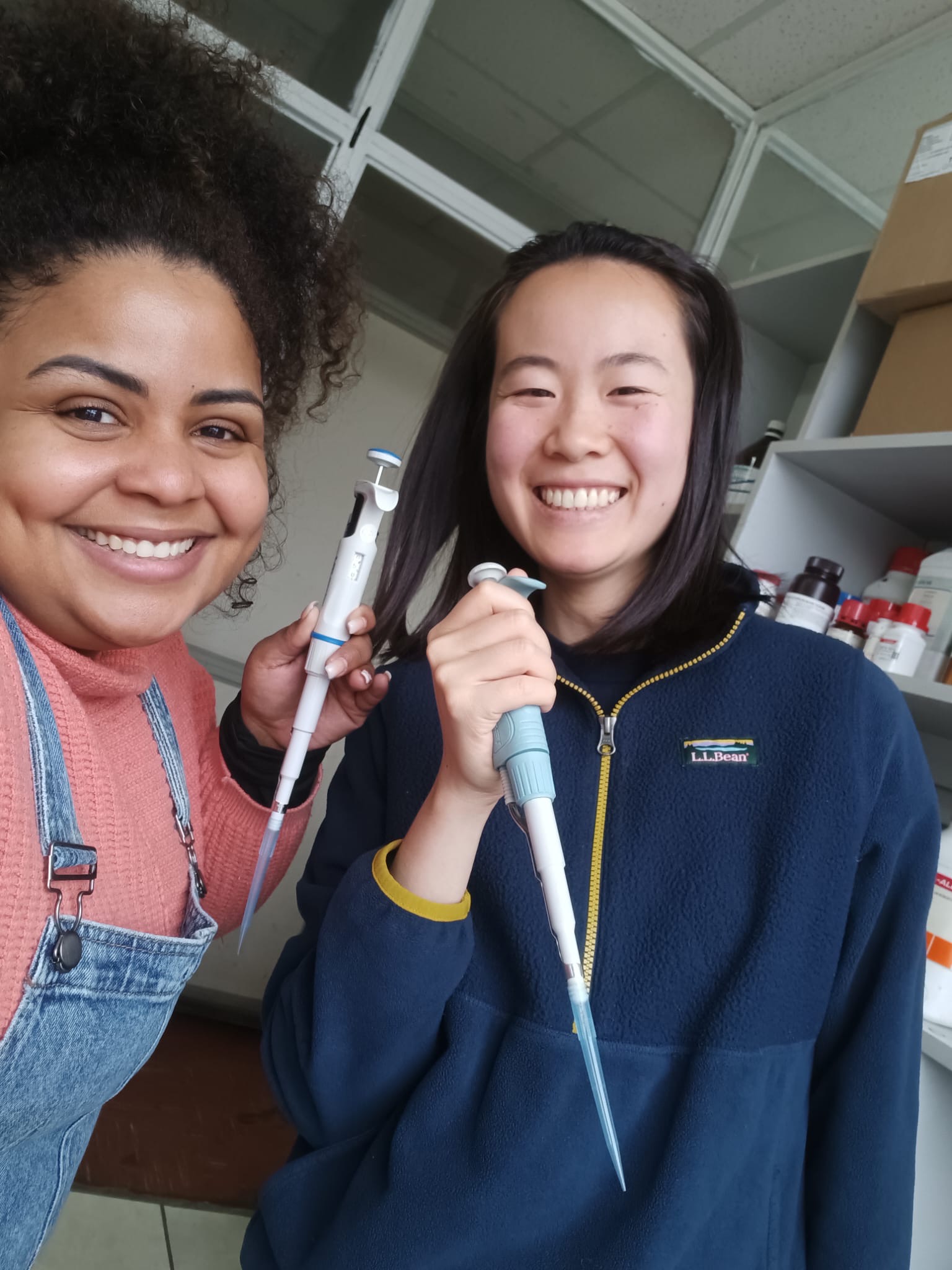 Investigators:
University of Chile
Additional support: Andrea Nicolau del Roure, Assistant, Project Coordinator, INTA
University of Michigan Mentors: To be determined
Candidates at the undergraduate, Masters and PhD levels are welcome to apply for a placement at this site. Trainees must be Proficient or fluent in Spanish to qualify.
Instituto de Nutricion y Tecnologia de los Alimentos (INTA) de la Universidad de Chile, Santiago, Chile
The Institute of Nutrition and Food Technology is an interdisciplinary body of the University of Chile. Its beginnings date back to 1954, followed by 20 years of institutional development. In 1976, it became an institute dependent on the Governing Body of the University. INTA´s research aims to investigate nutrition throughout the lifespan, factors affecting food production and security, and foods' nutritional effects, at the individual and population level.
Project: Life trajectories and ethnic inequalities in health and mortality among older adults: The EDES Study
The EDES (Ethnicity, Demography, Aging, and Health) study aims to understand ethnic inequalities in health and mortality in old age in Chile, in a context where indigenous populations represent a significant proportion of the national and Latin American population but remain underrepresented in national surveys and health information systems.
The project is based on a life course approach, recognizing that social, territorial, and material trajectories throughout an individual's history accumulate and are expressed in health in old age. However, Chile lacks comparative population studies that allow for the identification of how these inequalities arise and are sustained over time, limiting the design of culturally relevant public policies.
Students may choose to work on one of the following research project aims:
- Aim 1. To quantify the contribution of early-life socioeconomic conditions to ethnic differences in health in later life.
- Aim 2. To examine how social and material resources in old age moderate ethnic disparities in health and survival.
- Aim 3. To compare the educational gradient in mortality among Indigenous and non-Indigenous older adults,
The specific research question of the project will be agreed between the fellow and the researchers.
Rationale:
The EDES Study brings together demography, public health, epidemiology, aging research, and social sciences to examine how ethnic inequalities in health and survival emerge and become entrenched throughout the life course in Chile. EDES addresses a major gap in Latin American research, where Indigenous populations represent a significant share of national populations, yet remain underrepresented in large-scale aging studies, health surveillance systems, and the design of public health policy. The study is grounded in a life-course perspective, recognizing that health in old age is shaped not only by current conditions but also by socioeconomic environments during childhood, educational trajectories, and differential access to social and material resources over time. This approach allows us to investigate how structural inequalities contribute to persistent ethnic disparities in health and mortality among older adults.
By comparing Indigenous and non-Indigenous older adults, EDES seeks to identify mechanisms of accumulated (dis)advantage, the differential protective effects of education, and the role of social networks, community support, and access to healthcare in moderating or exacerbating health inequalities in later life.
Study Design and Methods:
The EDES Study (Ethnicity, Demography, Aging and Health) is a population-based study designed to examine ethnic inequalities in health and mortality among older adults in Chile. The study includes 831 individuals aged 60 and older, both Indigenous and non-Indigenous, living in urban and rural settings in the Metropolitan Region and the Region of La Araucanía. EDES was developed in response to the limited availability of epidemiological data that captures the cultural, territorial, and social diversity of aging experiences in Chile.
Data collection consisted of a face-to-face household survey conducted in 2022, which measured health status, chronic conditions, functional ability, social participation, subjective well-being, education, household composition, residential mobility, etc. The survey also collected information on family networks, caregiving roles, access to health services, income, and housing conditions, enabling a multidimensional characterization of living conditions in old age.
A central feature of EDES is its life-course approach, which recognizes that health in older age reflects the cumulative effects of social and economic advantages and disadvantages over the lifespan. Therefore, EDES examines how early-life socioeconomic conditions, educational and current social and material resources shape differences in health and survival between Indigenous and non-Indigenous older adults.
The study will be linked to national mortality records to analyse survival patterns over time. This will allow estimation of ethnic disparities in mortality risk, and assessment of how these disparities are influenced by educational attainment and by social and material resources available in old age. Students may choose to engage in different components of the EDES project according to their interests and academic level. Opportunities include data management and statistical analysis of the EDES dataset (using Stata or R), construction of life-course indicators, or participation in the development of comparative demographic and epidemiological analyses between Indigenous and non-Indigenous older adults. All research activities are coordinated through the Aging, Old Age and Quality of Life Research Group at INTA, Universidad de Chile.
Anticipated undergraduate/graduate student activities on project (to be further defined when the actual research question is agreed):
- Literature review
- Statistical analysis with data already collected
- Interpretation of the results according to the rationale, what is known in the field and public policy implications.
- Communication of results (to participants, health authorities, or the scientific community); writing of an abstract to be presented in a scientific meeting or a manuscript
Techniques/Methods students should be familiar with:
- Data management and cleaning.
- Basic descriptive statistics.
- Demographic analysis in aging populations.
- Multivariable regression models (preferred).
- Longitudinal or life-course analytical approaches (preferred).
Additional background valued:
- Life-course perspective.
- Social determinants of health.
- Ethnic and population health inequalities.
- Understanding of cumulative disadvantage processes.
If you have any questions, please contact Dr. Sandoval (msandoval@inta.uchile.cl).
Additional information about this site:
Santiago is the capital and largest city of Chile and one of the largest cities in the Americas. It is located in the country's central valley and is the center of the Santiago Metropolitan Region, which has a population of seven million, representing 40% of Chile's total population. Most of the city is situated between 500–650 m (1,640–2,133 ft)above sea level.
The Institute of Nutrition and Food Technology (INTA) is part of the University of Chile campus. University of Chile is a public research university, and the oldest university in the country.
Andrea Nicolau del Roure, Assistant, Project Coordinator at INTA, has worked with MHRT trainees for many years supporting their onboarding, orientation, and experience in Chile. Trainees will stay at a home stay or at a retal apartment within commuting distance of INTA. Trainees should be fluent in Spanish to navigate the commute, campus and work at INTA.