News Results

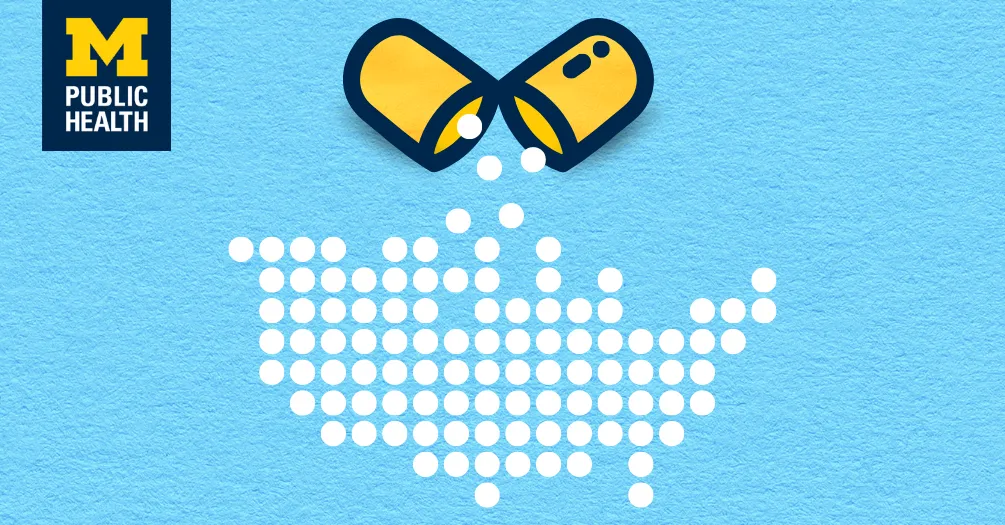
Illustration of a pill opening into the shape of the United States.

Study: Prior authorization limits help expand opioid addiction treatment where approvals were a frequent roadblock

State laws limiting prior authorization in Medicaid were associated with more patients receiving and starting buprenorphine, but only where insurance approval requirements frequently blocked access.

Medicaid is the largest funder of opioid use disorder treatment. University of Michigan researchers examined whether state laws easing insurance approval rules helped more patients get buprenorphine, and where they made a difference.


Gary Harper, center, with Ali Abazeed to his left, the chief public health officer and director of the Detroit Health Department; Laura Jadwin-Cakmak, at Abazeed's left, and 10 others

University of Michigan launches program to prepare master's students for HIV research careers

NIH-funded Advancing Research Careers in HIV (ARCH) program pairs students from public health, nursing and social work with mentors and community partners

The University of Michigan School of Public Health launched Advancing Research Careers in HIV (ARCH), a two-year program funded by a five-year NIH grant. Master’s students in public health, nursing and social work gain paid research experience, mentoring and community partnerships to prepare for PhD study and HIV research careers.

MMR Vaccine

The US lost its measles elimination status. Here's what that means and how we get it back.

On the latest episode of Population Healthy Policy Talks, Anand Parekh and epidemiologist Aubree Gordon talk through what happened and what it will take to stop its spread.

For the first time in 26 years, the United States has lost its measles elimination status. The Pan American Health Organization found that measles has been spreading continuously in the US for a year or more, with more than 5,400 cases reported by mid-November.

US health policy

Federal budget cuts, policy changes could leave deep scars on Americans' health

Lancet-published policy analysis outlines One Big Beautiful Bill's impacts on Americans' health as they face new rules on Medicare, Medicaid, SNAP and more

Changes to federal spending and policies under the second Trump administration are already affecting Americans' health and could worsen existing health disparities, strain public health infrastructure and have lasting consequences for years to come, according to new research led by the University of Michigan.