
On the Heights: February 2026
February highlights include faculty expertise on AI-driven cancer research, youth violence prevention, farmworker housing policy, epigenetics and ultra-processed foods, and a new state advisory appointment.
All Applications Open!
Apply Now
February highlights include faculty expertise on AI-driven cancer research, youth violence prevention, farmworker housing policy, epigenetics and ultra-processed foods, and a new state advisory appointment.

Epigenetics, the study of how environmental and behavioral factors modify gene expression, helps explain how what we eat influences our health.
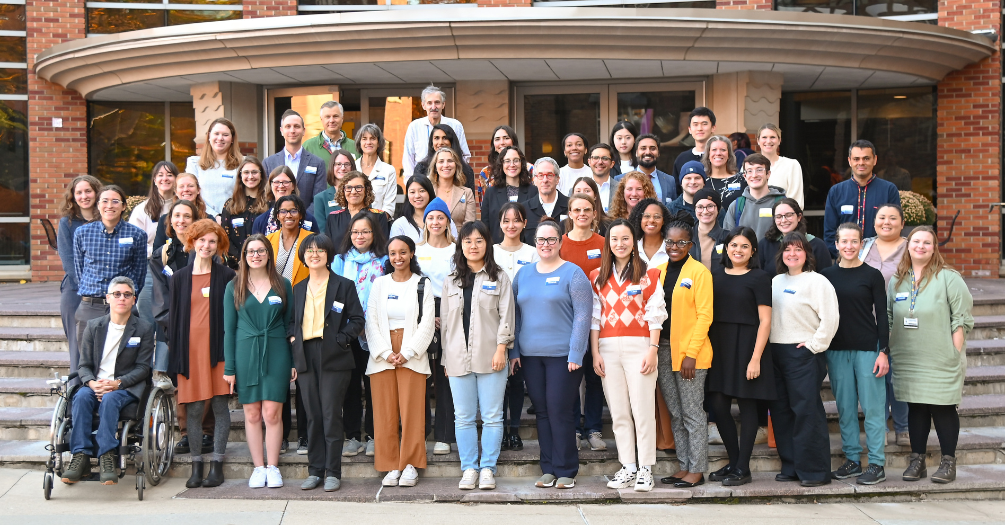
The Center for Social Epidemiology and Population Health (CSEPH) at the University of Michigan School of Public Health recently celebrated a remarkable milestone—25 years of groundbreaking research that has fundamentally changed how we understand the social determinants of health.

African American women who experience higher levels of perceived racial discrimination in everyday life have accelerated levels of biological aging, according to a recent study led by University of Michigan School of Public Health researcher Edward Ruiz-Narváez.

A team of University of Michigan researchers from the School of Public Health DoGoodS-Pi Environmental Epigenetics Lab and Michigan Medicine are working to understand how behaviors and environments during pregnancy can cause changes to the way genes work in offspring. This emerging field is known as toxicoepigenetics.

Dana Dolinoy, NSF International Chair and professor of Environmental Health Sciences and professor of Nutritional Sciences, was awarded a $6.9 million R35 award from the National Institute of Environmental Health Sciences (NIEHS) for the expansion of epigenetic science.