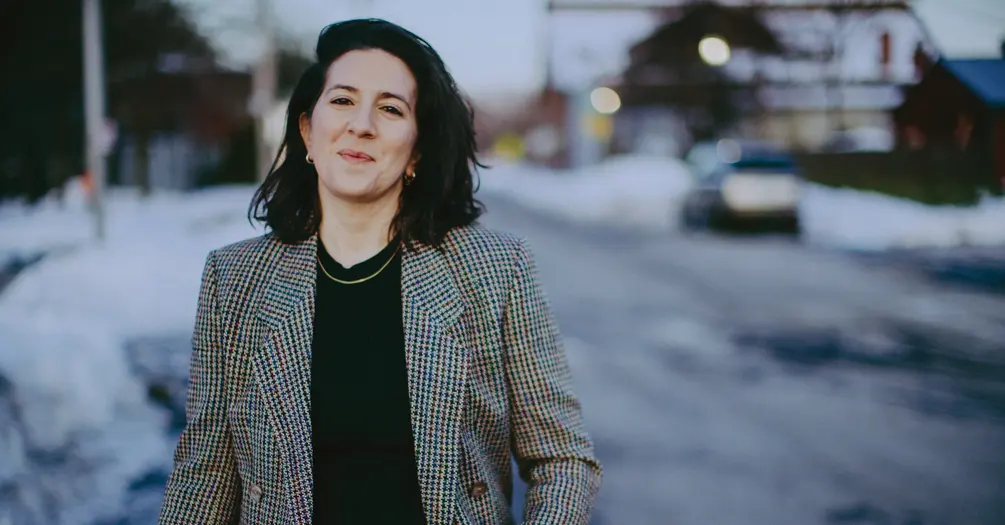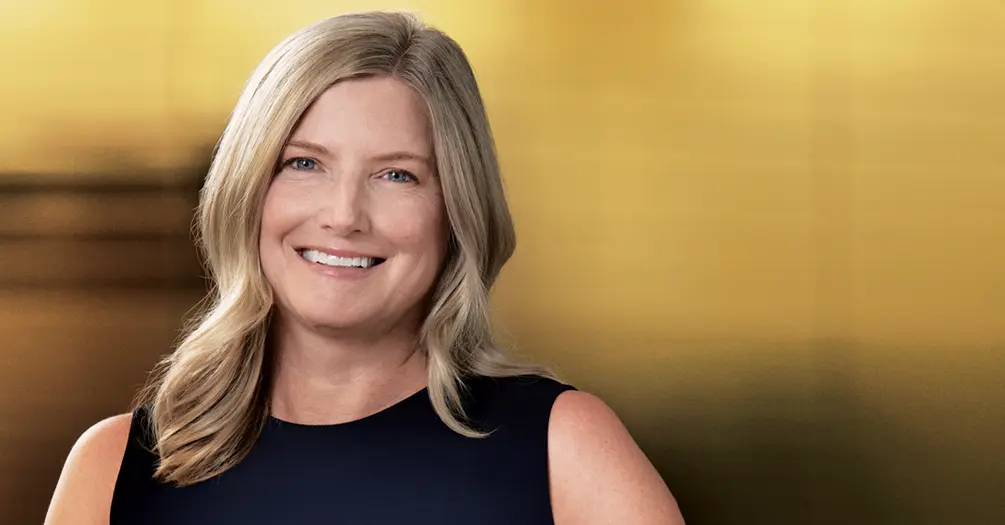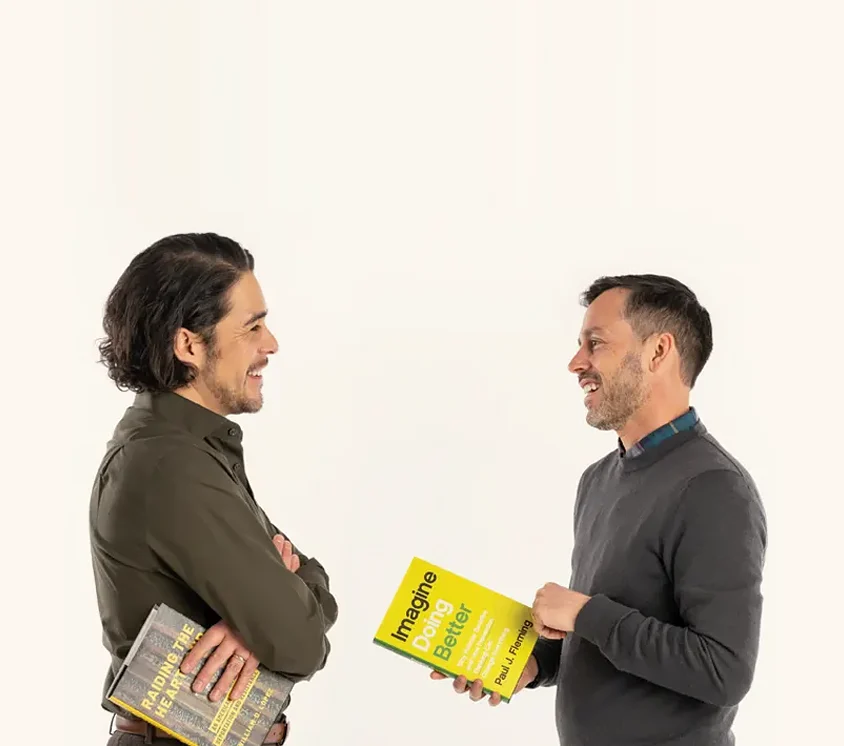
At the University of Michigan School of Public Health, the partnership between Paul Fleming and Bill Lopez runs deeper than shared research interests or adjacent office doors.
As colleagues, collaborators and friends, they’ve spent years challenging each other to think differently, support communities creatively, and push the boundaries of public health beyond theory and into real-world action.
Recently, their collaboration took center stage during a joint conversation as part of the “Libros at Lunchtime” series, held in the Winter semester and organized by the Department of Health Behavior & Health Equity. Both Fleming and Lopez had just released new books—each examining how public health, policy and social justice interact in the lives of vulnerable communities.
Their conversation was direct but warm, moving easily between fieldwork anecdotes, reflections on writing, and the practical challenges of translating research into action. For both, the stories told in their latest books are personal, rooted in years of community engagement and advocacy.
Fleming’s “Imagine Doing Better: Why Policies Backfire and How Prevention Thinking Can Change Everything” (Johns Hopkins University Press, Oct. 14, 2025) invites readers to rethink not just public health policy, but the way we envision our collective future.
“A lot of what this book is about is thinking about how we apply that perspective in a much broader way throughout our society,” said Fleming, associate professor of Health Behavior & Health Equity.
His research focuses on the root causes of racial health inequities and strategies for addressing them, including among Latino communities in Michigan.
That means asking hard questions: Who benefits from current public health policies? Who is left behind? And, most important, how do we shift from reactive solutions to prevention on a systemic scale?
One guiding principle for Fleming is “seven generations thinking,” an idea used by some Indigenous communities.
“When you’re making decisions for society, you really want to think about how this is going to impact folks seven generations into the future,” he said.
He divides his book into three sections—imagination, reflection and action—urging policymakers and practitioners to dream big, analyze honestly and take bold steps.
Fleming’s approach is deeply collaborative.
In Michigan, he partners with organizations like the Community Health and Social Services (CHASS) Center in Detroit, working to improve maternal and child health for Latino communities through projects funded by the Kellogg Foundation. He also examines how anti-racist principles can be embedded in both public health practice and education, mentoring future leaders to think critically about equity and social justice.
“Public health, at its core,” he said, “is about human-to-human connection.”
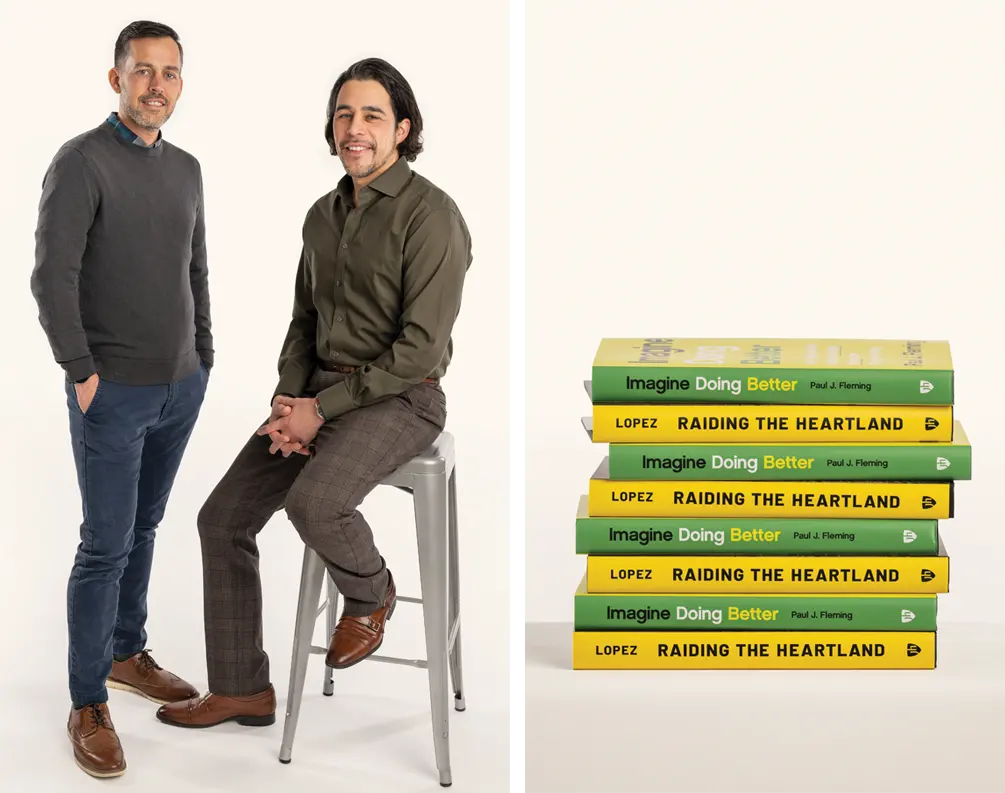
Lopez’s book, “Raiding the Heartland: An American Story of Deportation and Resistance” (Johns Hopkins University Press, Sept. 23, 2025), shares that commitment to connection, but is anchored in the experiences of those confronting immigration enforcement far from the border.
With a background in both research and advocacy, including collaborations with the Washtenaw Interfaith Coalition for Immigrant Rights and Synod Community Services, which housed the Washtenaw ID Project, Lopez brings the consequences of law enforcement, surveillance and deportation into sharp focus.
“Raiding the Heartland” chronicles six immigration worksite raids in rural communities—places far removed from the border but deeply affected by national policy. Lopez’s research shows how trauma spreads through families and neighborhoods.
Yet at the core of each story is not just suffering, but resistance: Neighbors alerting each other to ICE presence, churches gathering supplies for families suddenly without parents or breadwinners, acts of care that the headlines often miss.
“One of the particular joys of this book was being able to do what we do well in public health—which is talk about what causes illness, in this case social illness. But we also talk about how we care for others after that,” said Lopez, clinical associate professor of Health Behavior & Health Equity,
For Lopez, documenting harm matters, but so does recording hope and collective resilience.
Both Lopez and Fleming admit that bringing emotion into their writing—and breaking away from academic convention—posed its own challenges.
Fleming described the learning curve: “One of my very first readers was my sister. Her first reaction was, ‘So, this is like a chapter within a textbook?’” That feedback forced him to infuse more storytelling and feeling into the narrative, a move he now considers essential for public health communication.
Lopez agreed; writing about absence—the empty spaces left when family members are deported—required an entirely new set of writing skills, including new metaphorical language.
“Words like PTSD, anxiety, depression caused by fear of deportation have been really important to relate to the media, but often it doesn’t land,” he said. “The other words that land in public are ‘terrified,’ ‘haunting,’ ‘ghost town.’”
He learned that public health data must be transformed into stories that motivate action through feeling.
When the conversation turned to public engagement, both faculty members described how speaking to general audiences and students impacted their work.
Fleming, reflecting on campus events and talks, noted the move from research presentations to public storytelling demands a shift.
“Less about how I show the research that proves my point, which is a little bit of how academic presentations can go, to how do I make the audience feel and think about things differently?” he said.
For Lopez, connecting with community members during advocacy work sharpened his understanding of what matters.
“‘Did your article or dissertation keep the reader’s attention?’ is never a question I was ever asked,” he said. “There are a lot of writing skills we use for each.”
Their research projects and advocacy work both underscore the message that public health must be built on real partnerships—whether in Washtenaw County’s ID program, Latino maternal health initiatives, or broader efforts to integrate anti-racist teaching and practice. The books and the event highlight the importance of never losing sight of the communities at the heart of public health efforts.
The questions Fleming and Lopez raised during their talk remain timely today. How do we build public health research and practice that is relevant, responsive and rooted in community? How do we move past reacting to crises—whether law enforcement trauma or health inequities—and instead imagine and act for a healthier, more just future?
According to Fleming and Lopez, the answer lies in more than data or policy reports. It’s in the stories we tell, the partnerships we build, and the imagination that inspires lasting change.
Their combined message: Public health is at its best not only in the classroom or the research lab, but wherever people come together to envision something better—and then get to work.